
Modernisation of federal budgetary procedures
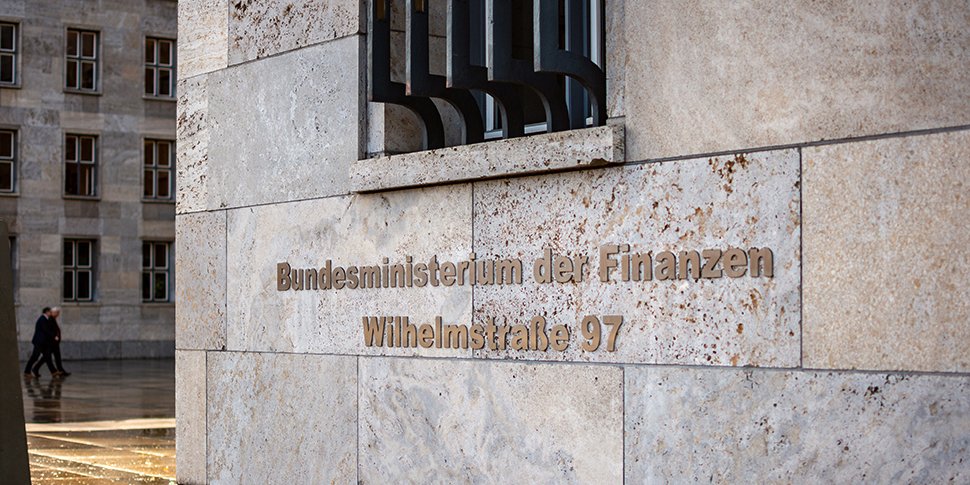
The Federal Ministry of Finance (BMF) is modernising and digitising the budgetary procedures (preparation of the federal budget, revenue procedures, etc.) of the federal government. One subtask in the modernisation is the creation of a common understanding of the federal budget in the form of a specialised model that describes the individual parts of the budget in a metamodel. The aim was to describe the concepts of the budget, cash and accounting system (HKR) at a higher level of abstraction, independent of a platform and programming language. With Q-Modelino, the components of the specialised model were identified and refined. With the help of this specialised model, all those involved in the modernisation of budgetary procedures can analyse requirements, specifications and functionalities on a common basis and implement them in a verifiable manner. In addition, parts of the specialised model were provided with a level of detail that enables executability in the form of mock-ups and prototypes.

Development of demonstrators with Q-Modelino
At an umbrella organisation of chambers of industry and commerce, specialised services, e.g., for in-company training, business registration or insolvency, were digitalised. As part of a joint software development project, a demonstrator was implemented for a selected application scenario from the field of education. The requirements, IT architecture and the technical data model were described in UML using the Q-Modelino platform. Parts of the demonstrator could be generated from the models created. In addition, evaluation criteria for a tender for the digital report portfolio for education were derived semi-automatically from the requirements models in the form of a report.
Higher software quality through requirements modelling
When developing extensive and distributed IT systems, the correct implementation of the required functionalities is crucial. Major challenges can arise even at this early stage, e.g., in the modelling of requirements that are placed on the software to be developed. For the real use and operation of such systems, non-functional requirements (NFR) are critical to success in addition to functional requirements.
For a public administration client, we supported a tendering process with Q-Modelino. Q-Modelino was used to model requirements and capture business processes. One objective was to include quality features in the form of non-functional requirements at an early stage. We were able to support the customer in creating more detailed tenders with greater coverage of non-functional aspects. In particular, the structured approach by Q-Modelino led to a significant increase in the quality of the requirements creation, taking into account non-functional components of the systems. Another success factor for the customer was a higher degree of description reuse for non-functional system requirements. The possibility of web-based, cooperative working with the help of Q-Modelino made it easy and straightforward to involve subject matter experts in the requirements elicitation.
